From the RHS Experts
Article: RHS – https://www.rhs.org.uk/advice/profile?pid=181
Common names Aphids, greenfly, blackfly, plant lice
Scientific name Various – many species
Plants affected Most plants are susceptible
Main symptoms Poor and distorted growth, sticky honeydew and sooty moulds
Most active Spring to late summer on garden plants; all year round indoors
What are aphids?
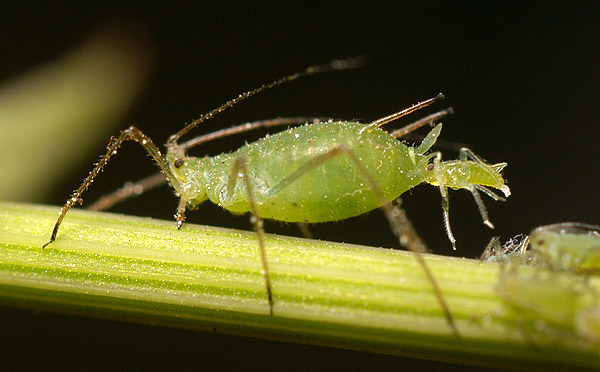
Aphids are sap-sucking true-bugs. They range in size from 1 to 7mm (¼in or less) long. Some aphids are known as greenfly or blackfly, but there are species that are yellow, pink, white or mottled. Some species, like woolly beech aphid and woolly aphid on apple, cover themselves with a white waxy secretion and can be confused with some scale insects, mealybug or whitefly. Most aphids suck sap from foliage, stems and flowers but feed from roots.
There are more than 500 aphid species in Britain. Some feed on only one or two plant species, but others can be found on a wide range of plant hosts. Almost any plant can be affected, including ornamentals, vegetables, fruits, greenhouse plants and houseplants.
Symptoms
You may see the following symptoms:
- It is usually possible to see aphid infestations with the naked eye, and they tend to colonise shoot tips, flower buds and the underside of younger leaves
- Aphids can cause stunted growth with curled or distorted leaves and can weaken the plant
- Many aphids excrete a sticky honeydew which on which black sooty moulds can grow
- White cast skins of aphids can accumulate on the upper surface of leaves
Article: Good Housekeeping (USA) – https://www.goodhousekeeping.com/home/gardening/a20705991/garden-insect-pests/
These tiny, pear-shaped critters have long antennae and two tubes projecting rearward from their abdomen. They usually hang out on most fruits and vegetables, flowers, ornamentals, and shade trees. Aphids suck plant sap, causing foliage to distort and leaves to drop; honeydew excreted on leaves supports sooty mould growth; and feeding spreads viral diseases. To control these bugs:
- Wash plants with strong spray of water
- Encourage native predators and parasites such as aphid midges, lacewings, and lady beetles
- When feasible, cover plants with floating row covers
- Apply hot-pepper or garlic repellent sprays
- For severe problems, apply horticultural oil, insecticidal soap, or neem oil
Article: RHS – https://www.rhs.org.uk/advice/profile?pid=181
Article: Good Housekeeping (USA) – https://www.goodhousekeeping.com/home/gardening/a20705991/garden-insect-pests/
Cover image by MedievalRich, CC BY-SA 3.0, https://commons.wikimedia.org/w/index.php?curid=3467494
 Eaten by Slugs
Leave a comment